Get out of
“Get out of.”
“Get out of” is a phrasal verb that means to avoid doing something , especially something you are expected or required to do. When you “get out of” something, you make an effort to escape a responsibility , a task, or an obligation .
Get out of jury service
What are some times when you might want to escape a responsibility?
In a recent story here at Plain English, we talked about jury duty . In the U.S., citizens have a responsibility to serve on juries when we are called. But not every person who is called actually serves on a jury .
Some people are called and try to get out of it. They want to escape the responsibility. They don’t want to sit on a jury. So they can tell the court they have a hardship , a disability , or some terrible prejudice or bias . They say something to get out of serving on a jury.
If you want to get out of jury service, you might say that you have to care for a sick relative at home and you can’t be away all day . The court might dismiss you . Don’t have a good excuse? Don’t worry. You can still get out of jury duty. You can say something like, “Any person who is arrested is obviously guilty .”
That’s a great way to get out of jury duty! Why? Because if you say something like that, it means you can’t be a fair or impartial juror . The defense attorneys won’t let you sit on the jury if you think that any arrested person is automatically guilty.
You don’t have to lie. You can sometimes get out of jury duty by saying you have too much work, that you don’t feel comfortable judging a case, things like that. You can tell the truth and still get out of serving.
So that’s getting out of jury duty. Let’s take a look at a few other examples using “get out of.”
Get out of household chores
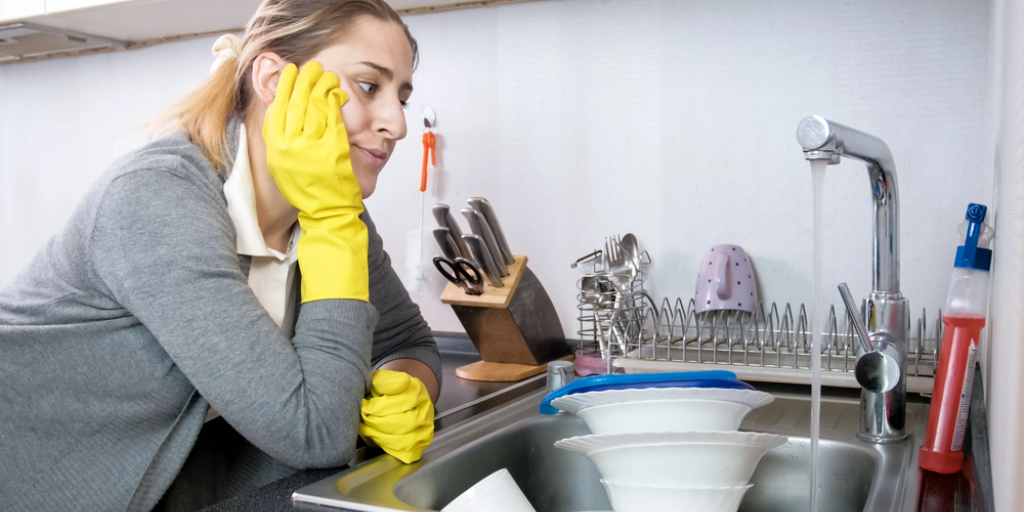
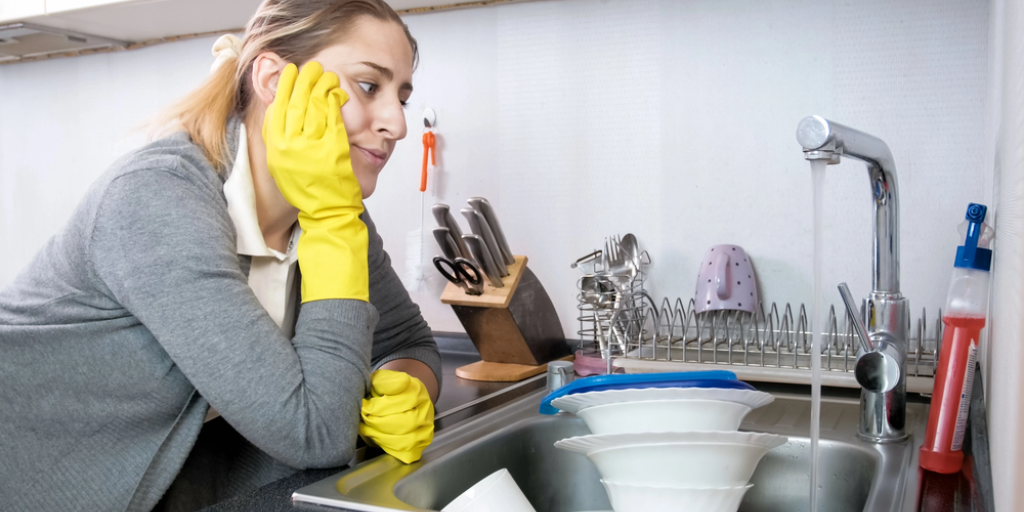
What’s your least favorite household chore ? For some people, it’s washing dishes. In your family, in your household, who washes dishes? Is it always the same person or do you take turns ?
Here’s an example with “get out of:” She always finds a way to get out of washing dishes after dinner.
That means, she always finds a way to avoid doing that thing. If it’s your daughter, she might say that she can’t wash dishes because she has to do homework, or she has plans with friends, or she helped cook so she shouldn’t have to clean up . Those are all excuses someone might use to get out of washing dishes after dinner.
I would never say that. I actually like doing dishes after dinner. But here’s what I want to get out of: I don’t like helping someone else cook. I don’t mind cooking myself. But I don’t like it when someone else asks me to chop an onion . So I usually try to get out of helping in meal prep. I either make myself busy before the meal or I volunteer to clean up after. That’s how I get out of helping people cook.
Get out of things at work
It has been a while since I’ve worked in a big company. But if you work at a big company, then you probably have a lot of responsibilities that you don’t really like. You might have to take online trainings, go to boring meetings , fill out pointless forms , things like that.
I was always a good corporate citizen . I tried to do my part. But sometimes I tried to get out of going to those all-day meetings . I might conveniently schedule a meeting with a customer at their office. What a coincidence!
“Oh, I have to meet a customer at their office,” I would say, truthfully. That would be a way to get out of going to an all-day meeting at my own company. Or I might say, “I scheduled a vacation a long time ago, so I can’t attend.” That’s another way to get out of it.
So you see, to get out of a responsibility is to avoid doing it. But it’s not about acting very unethically or illegally . It’s not about overtly breaking rules . It’s about finding a way, basically within the rules , to avoid doing something.
See you next time!
And that’s all for us here at Plain English. It’s good to be back in the routine , new episodes, new topics. I hope you enjoyed our summer episodes. I took the summer to work on some marketing, some business stuff , but I’m glad to be back to our current events .
On Thursday, we’ll talk about Joe Biden and what happened in that debate with Trump, and how he came to withdraw from the upcoming election —this was high drama, if you weren’t following it. Books will be written about this; they will study and argue about this for decades.
That’s on Thursday. And then next week, we’ll start with our first monthly theme. I mentioned in a special episode that we’re going to have a theme about once a month. And we’ll do a few episodes per month about that one theme. And this month is going to be fashion. So we’ll kick that off next week.
This was lesson 706. So remember, get the transcripts at PlainEnglish.com/706. See you back here on Thursday.
Learn to express your best ideas
Get the tools you need to speak more fluently in English